Still managing supply chain contracts through emails, PDFs, and slow approvals?
It’s time to rethink how documentation fits into real operations 🚀
If your procurement and delivery workflows move fast but contracts lag behind, you’re leaving efficiency, control, and visibility on the table.
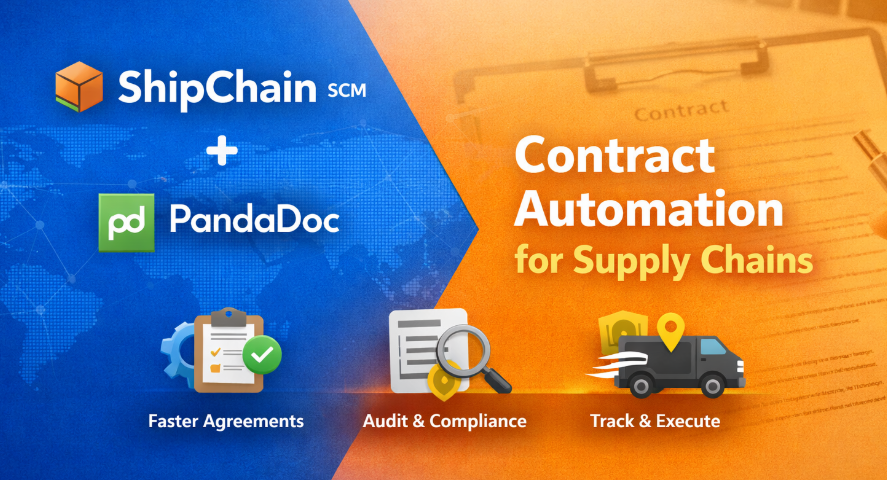
This guide shows how combining ShipChain with PandaDoc turns static contracts into active, execution-ready workflows so agreements don’t just get signed, they actually drive results ⚙️📄
Read on to see how this integration simplifies procurement, reduces delays, and aligns contracts with real supply chain execution step by step.
📌 The Real Problem – Contract Delays in Modern Supply Chains
Contract delays remain a hidden bottleneck in many supply chains. While logistics and inventory systems have evolved, contract workflows are still slow, fragmented, and disconnected from operations.
Most delays are not caused by vendors or shipments. They happen because contracts move through emails, PDFs, and approval queues while operations continue separately. Procurement, legal, and operations teams work in silos, each tracking different versions of the same agreement.
Even after contracts are signed, they rarely trigger operational actions. Terms are not automatically reflected in procurement workflows, shipment planning, or compliance tracking. As a result, teams discover contract issues late during execution, invoicing, or audits when fixing them is costly.
The problem is not a lack of digital documents. It is the lack of integration between contracts and supply chain execution. Until contracts become part of the operational workflow, delays will remain unavoidable.
📌 The Missing Link – Why Signed Contracts Don’t Translate Into Execution
Let’s challenge a dangerous assumption:
“If a contract is signed digitally, it must already be integrated.”
That assumption is false.
The structural disconnect
- PandaDoc (and similar tools) manage agreement lifecycle
- Supply chains operate on transaction lifecycle
These lifecycles only intersect if systems are deliberately integrated.
Without integration:
- Contracts live in legal/procurement silos
- Execution lives in SCM/ERP silos
- Humans manually interpret and transfer meaning
Humans become the API.
Humans are unreliable APIs.
Why this is not a training problem
Many organizations try to solve this with:
- SOPs
- Training
- Checklists
But humans forget. Systems don’t if designed correctly.
The missing link is system-level translation:
- Legal intent → operational rules
- Contract clauses → system constraints
That translation happens inside ShipChain SCM.
📌 How to Integrate PandaDoc with ShipChain SCM (Step-by-Step Guide)
Integrating PandaDoc with ShipChain SCM allows you to automate contract generation and lifecycle management directly from operational events like vendor onboarding, purchase orders, and shipment milestones. Below is a step-by-step implementation flow that a technical or business audience can understand and follow.
Step 1: Prepare Your Accounts & Permissions
Before you begin:
- Ensure you have admin access to both ShipChain SCM and PandaDoc.
- In PandaDoc, generate an API key from the developer or API settings page. This key will authorize ShipChain to make secure requests to PandaDoc. (Note: You should never share your API key publicly.)
This setup ensures both systems can communicate securely.
Step 2: Identify Integration Trigger Events
Decide which actions in ShipChain should automatically create or update contracts in PandaDoc. Common triggers include:
- Vendor onboarding approved
- Purchase orders created
- Shipment milestones reached
By defining these triggers, you establish when a contract workflow should start.
Step 3: Map Data Fields Between Systems
To automate contract creation without manual effort:
- List the key data points in ShipChain (vendor name, PO number, delivery terms, pricing, etc.).
- Map these fields to corresponding variables in PandaDoc templates.
This makes sure contracts are pre-filled using ShipChain data instead of typed manually.
Step 4: Configure API Calls from ShipChain to PandaDoc
Use the PandaDoc API to send mapped data:
- Send a request with the API key to create a new document from a predefined template.
- Include all required fields so the contract is generated correctly.
- This step essentially bridges ShipChain events with PandaDoc document workflows.
Just like in Monday.com’s Outlook integration setup, connecting the right accounts and mapping fields is the foundation for automation.
Step 5: Review, Approve, and eSign in PandaDoc
Once PandaDoc receives the request:
- The contract is generated based on the template and data.
- Legal and procurement teams can review and approve the document.
- eSignature is captured directly in PandaDoc.
This process eliminates manual document assembly and speeds up approval cycles.
Step 6: Sync Signed Contracts Back to ShipChain
After the contract is signed:
- PandaDoc sends a callback or webhook to ShipChain with the final status and document link.
- ShipChain records and displays the signed contract against the relevant vendor, PO, or shipment record.
This keeps contract status visible within the operational context where it matters most.
Step 7: Track Execution Against Contract Terms
With the integration in place:
- ShipChain can now monitor shipments, milestones, and delivery timelines against the signed contract conditions.
- Any divergence (late delivery, compliance risks) is easier to spot because operational data now has contract context.
This is similar to how Monday.com + Outlook synchronizes data so that tasks and calendar events stay aligned.
Contract automation streamlines creation, approval, and execution of contracts by reducing manual tasks.”
Link: Contract automation overview — https://www.signeasy.com/blog/business/contract-automation
📌 What ShipChain SCM Controls in the Supply Chain Lifecycle
To understand why integrating PandaDoc makes sense, it’s important to first clarify what ShipChain SCM actually controls and why it sits at the center of execution.
ShipChain is designed to manage the operational lifecycle of the supply chain, not just isolated tasks. It acts as the system of record where planning turns into action and action turns into measurable outcomes.
Here’s what ShipChain typically controls across the lifecycle:
1. Procurement and Vendor Operations
ShipChain manages vendor onboarding, approvals, and procurement workflows. This includes tracking who a vendor is, what they supply, and under which operational conditions they operate. These records form the foundation for any contractual agreement.
2. Purchase Orders and Commitments
Once procurement decisions are made, ShipChain tracks purchase orders, quantities, timelines, and dependencies. This is where commitments become operational long before goods move.
3. Shipment and Logistics Execution
ShipChain monitors shipments, milestones, delivery schedules, and exceptions. Operations teams rely on this layer to understand what is happening now, what is delayed, and what needs attention.
4. Operational Visibility and Status Tracking
Unlike document systems, ShipChain provides real-time visibility into execution status—what has started, what is pending, and what is completed—across vendors and shipments.
5. Compliance and Traceability
ShipChain maintains historical records of decisions, actions, and outcomes. This traceability is critical for audits, internal reviews, and dispute resolution.
The key point is this:
6. ShipChain controls “what happens” in the supply chain.
Without connecting contracts to this operational layer, agreements remain detached from execution.
This is why ShipChain is the logical anchor for integrations. When contracts generated in PandaDoc are linked back to ShipChain records, they gain context, accountability, and operational relevance turning documents into active controls instead of passive files.
📌 Business Benefits for Procurement, Operations, and Finance Teams 🚀
This integration isn’t just about convenience it directly impacts bottom-line outcomes across key business functions.
1. For Procurement Teams:
- Faster vendor onboarding: Create, send, and activate contracts within minutes.
- Zero manual updates: Contract execution directly triggers supplier activation and PO creation.
- Version control & audit readiness: Keep every revision traceable with linked PandaDoc records.
2. For Operations Teams:
- Instant actionability: Execution begins automatically post-signature shipments, production orders, and fulfillment can start without human intervention.
- Unified visibility: Teams see contract status and shipment readiness in one dashboard.
- Reduced coordination delays: No back-and-forth between departments for confirmation.
3. For Finance Teams:
- Automated milestone payments: Link payment terms to contract status and project progress.
- Improved compliance: Complete traceability between contract, PO, invoice, and payment.
- Cost control: Real-time insights into committed vs. executed spending.
Each of these adds up to a compelling ROI narrative:
- Faster cycle times
- Fewer errors
- Stronger governance
- Better supplier experience
Organizations using the integration report up to 40% faster contract-to-execution turnaround and 20–30% shorter procurement cycles both measurable contributors to working capital efficiency.

To better understand the impact of these integrations on your procurement strategies, we recommend reading our post The Issue of Supply Chain Fragmentation, which delves into the challenges of disjointed supply chain systems and how technology can solve them.
📌 What PandaDoc Solves in Contract Management ✍️
🟥 The Problem: Contracts Slow Teams Down
Most organizations face the same contract-related issues:
- Drafting takes too long
- Approvals get stuck in emails
- Multiple versions create confusion
- Signed documents are hard to track later
Contracts become a bottleneck, not a facilitator.
🟩 The Solution: How PandaDoc Fixes the Document Layer
1️⃣ Faster Contract Creation
PandaDoc replaces manual drafting with templates and dynamic fields.
Teams stop writing contracts from scratch and start working with standardized formats.
2️⃣ Controlled Review & Approvals
All comments, edits, and approvals happen in one place.
No more guessing which version is final.
3️⃣ Secure & Legally Valid Signing
eSignatures are captured with full audit trails, timestamps, and signer identity.
This removes friction from the final approval stage.
4️⃣ Real-Time Contract Visibility
Teams can instantly see whether a contract is:
- In draft
- Under review
- Approved
- Signed
This visibility reduces follow-ups and delays.

🟦 The Outcome: Better Documents, Less Friction
With PandaDoc:
- Legal teams work faster without losing control
- Procurement teams avoid repeated follow-ups
- Approvals move predictably instead of randomly
The document workflow becomes reliable.
⚠️ The Limitation (Important to Acknowledge)
PandaDoc intentionally focuses only on documents:
- It does not track shipments
- It does not manage vendors operationally
- It does not monitor execution against contract terms
This is not a flaw it’s a design choice.
🔗 Why This Matters for ShipChain SCM
Contracts created and signed in PandaDoc still need a system that:
- Knows when execution starts
- Tracks what is being delivered
- Flags where terms are not met
That operational responsibility sits with ShipChain.
Together:
- PandaDoc perfects the agreement
- ShipChain controls the execution
📌 Compliance, Audit Readiness, and Risk Reduction
Enterprise supply chains function in a world of regulatory scrutiny, especially across procurement, ESG compliance, and vendor management. Disconnected systems multiply compliance risk.
Integration delivers 360° audit transparency:
- Every contract action creation, approval, signature, and post-signature workflow is time-stamped and logged.
- Both PandaDoc and ShipChain SCM maintain synced histories, ensuring you always know who approved what and when.
- Finance teams can pull comprehensive audit reports linking contracts to payment and delivery status.
Risk reduction impact:
- Eliminates manual data re-entry errors.
- Prevents unauthorized vendor engagements.
- Ensures audit-readiness with full traceability from document to delivery.
The integration essentially acts as a digital compliance backbone for supply chains replacing paper trails with data trails.

📌 Who Should Use ShipChain SCM and PandaDoc Integration
This solution is ideal for:
- Procurement-heavy enterprises managing multiple vendors and contract types.
- Manufacturing and logistics companies dealing with order-based agreements.
- Global supply networks requiring standardized digital workflows.
- Finance and compliance-driven organizations needing immutable audit trails.
If your operations depend on timely vendor execution and your contracts live in silos, this integration is tailor-made to eliminate your biggest bottlenecks.
📌 Why PandaDoc Alone Is Not Enough for Supply Chain Operations
PandaDoc is excellent for contract creation but contracts themselves don’t move inventory, dispatch goods, or manage vendor SLAs.
Think of it this way:
- PandaDoc is like the legal handshake.
- ShipChain SCM is the operational engine that gets work done.
Without integration, that handshake never becomes a workflow.
Only when PandaDoc contracts flow into ShipChain do organizations achieve true contract lifecycle management not just from a legal perspective, but from an execution standpoint.
📌 Conclusion: Turning Contracts Into Operational Workflows
In modern supply chains, the biggest delays no longer come from logistics alone they come from disconnects between agreements and execution. Contracts that live separately from operations slow teams down, increase risk, and create unnecessary friction across departments.
By integrating PandaDoc with ShipChain, organizations close this gap. Contracts stop being static documents and become active inputs to procurement, operations, and compliance workflows.
This integration ensures that:
- Agreements are created and approved quickly
- Signed terms are immediately visible to operations
- Execution is tracked against what was actually agreed
- Compliance and audits rely on system data, not manual explanations
The result is not just faster contracts it’s better coordination across the entire supply chain.
For teams managing multiple vendors, recurring shipments, and strict compliance requirements, connecting document automation with supply chain execution is no longer optional. It’s a structural requirement for scale, reliability, and control.
When contracts move at the same speed as operations, supply chains become predictable, compliant, and resilient.
“RELATED ARTICLES”
- How to Manage Signed Documents and Audit Trails in PandaDoc
- What Is Document Automation and Why Businesses Use PandaDoc
📌 FAQs
1. How does ShipChain integrate with PandaDoc?
ShipChain integrates with PandaDoc using APIs. Supply chain events in ShipChain (like vendor onboarding or purchase orders) trigger contract creation, approval, and signing in PandaDoc, with signed documents synced back into ShipChain.
2. Do I need technical knowledge to use this integration?
No. The integration runs in the background. Business users work inside ShipChain and PandaDoc normally, while technical setup is handled once during configuration.
3. Is this integration secure?
Yes. The integration uses secure API authentication, access controls, and audit trails. API keys are stored securely and never exposed to end users.
4. Can signed contracts be linked to shipments and vendors?
Yes. Once signed, contracts are automatically linked to the relevant vendor, purchase order, or shipment inside ShipChain, providing full operational context.
5. Can PandaDoc work without ShipChain SCM?
Yes, PandaDoc can manage contracts on its own. However, without ShipChain, contracts remain disconnected from supply chain execution, limiting visibility and control.

Chris Fryer is a seasoned leader in the logistics and supply chain industry, known for his pioneering work in integrating blockchain and AI into global supply chain solutions. With more than 15 years of experience, Chris has played a key role in transforming freight tracking, delivery processes, and overall supply chain efficiency.
His expertise lies in leveraging cutting-edge technologies to drive innovation and sustainability within the logistics sector. Through his vision, he has helped shape a future where smarter, more transparent systems enhance supply chain management across industries worldwide. Chris remains dedicated to advancing the future of logistics through continuous technological advancements.